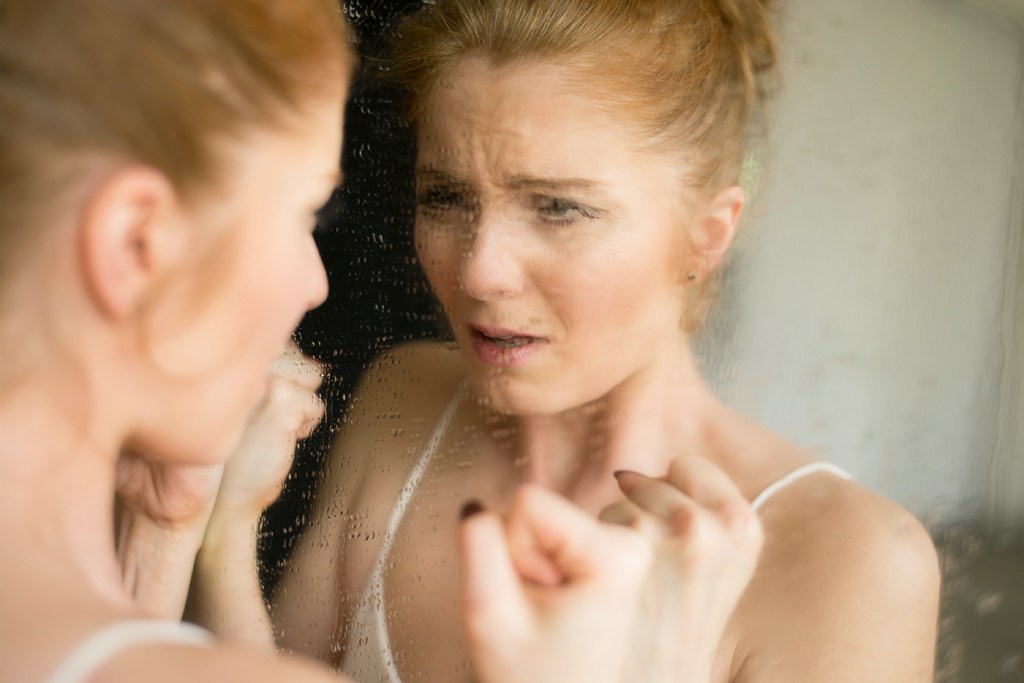
It’s no secret that entire industries would collapse if today all women collectively decided to be at peace with themselves and genuinely like who they are and what they look like. But what is it, exactly, that keeps pulling us back into doubt? Into wondering whether we’re pretty enough, good enough, young enough?
Girls as young as fourteen or even younger start smearing anti-ageing face masks onto their skin to prevent it from ageing. By seventeen, we’ve graduated to enzyme peels and anti-cellulite creams, and for the eighteenth birthday, we’re no longer wishing for a car but for Botox and lip filler instead. (Ideally with the car on top, obviously.)
Twenty years after The Devil Wears Prada, we now see Emily Blunt in the sequel with skin just as smooth — if not smoother — than it was two decades ago. (Sorry, Emily, nothing against you. I know the pressure is immense, and we’re all victims of this multigenerational, global, multimillion-dollar marketing disaster. You’re not alone.) Personally, I’m fairly certain my skin was plumper twenty years ago than it is today. And considering everything I’ve been living through, it seems almost logical that years of frowning at both global catastrophes and private emotional turmoils might have left visible traces on my forehead. Fun fact: it is claimed that the left side of the face reflects the emotional part of the self. Guess which side supposedly starts drooping first under stress, emotional entanglements, and exhaustion. (Yes, I’m projecting here. And if you’ve now caught yourself standing in front of a mirror comparing the left side of your face to the right while mentally replaying every emotionally devastating chapter of your life that may have contributed to this difference — congratulations. Welcome aboard this worldwide conspiracy against women, one that survives by planting doubt so deeply it seems to become almost impossible to rip the roots out.)
What do grey hair, wrinkles, and slower movement represent nowadays? More often than not something like: “Oh my God, she’s gotten old,” followed by: “Well, she could do something (or have something done).” All while we collectively chase ideals that are absolutely unattainable. “I want to look like that when I’m her age.” Wonderful, Rachel. Better start saving for a personal trainer and the best beauty doc — what a word and phrase, by the way — in one of the major cities. And don’t get me wrong: none of this is meant as criticism toward plastic surgeons, many of whom already performed miracles, nor toward people who choose cosmetic procedures. But surely we’re still allowed to question our definition of beauty and the motivation to have these procedures done.
There was a time when white hair symbolized wisdom and knowledge. For men, it often still does. Certain men — thinking of Sean Connery and Richard Gere — seem to have become more desirable as they aged and their physical appearance reflected it, didn’t they? “Yes, but men don’t have to be beautiful. They just need that certain something.” Oh, aha. And when exactly did the memo go out that women do have to be beautiful? And why are wisdom and knowledge not considered beautiful? Or are they only beautiful in certain parts of the population — usually the ones with doubled chromosomes — while the other half is only allowed to think about doubling their cup size?
How is it that the very things that make men appear attractive or more attractive are treated as depreciating assets in women?
Is youth and beauty really the entirety of our value? And we haven’t even begun dissecting the concept of “beauty” itself and how it changes over time. I mean, if low-rise jeans and heroin chic are suddenly making a comeback after the peak of big booties and body positivity has declined, then surely it’s fair to ask when ultra-thin eyebrows or corsets will return too. The curves of Rubens probably won’t be making a comeback anytime soon though, I think we can agree on that. Too much money and too much potential for profit lies in Ozempic and other weight-loss products.
Now let’s assume, just for a moment, that wrinkles are life lines, lines of lives, stories permanently etched onto the canvas of a face because they’ve already been lived, and nobody gets to travel back in time. Let’s assume, just for a moment, that white hair truly does symbolize wisdom and experience. Wouldn’t the logical conclusion then be this: if entire societies — driven by the greed of massive industries, viva el capitalismo! — and the media keep trying to convince us that these things make women unattractive, then maybe, just maybe, it can only mean one thing: Society, the industries that are fed and nurtured by our insecurities, and the media don’t want wise women.
Let’s assume wise women ask questions. Experienced women have learned things. Gathered knowledge. They give no fucks anymore. They’ve stepped into their power and are no longer afraid to use it. Well then, it suddenly seems fairly plausible to assume they might pose a threat to the status quo. Which raises the next question: who benefits from the status quo? Because that’s always the question, isn’t it? Who benefits from things staying exactly as they are? (I’ll just leave that question here on the table. The art isn’t in giving answers. The art is in asking the right and important questions.)
A call to action? Instructions? You won’t get them from me. At least not today. Not in this blog post. But I do want to ask a few more questions.
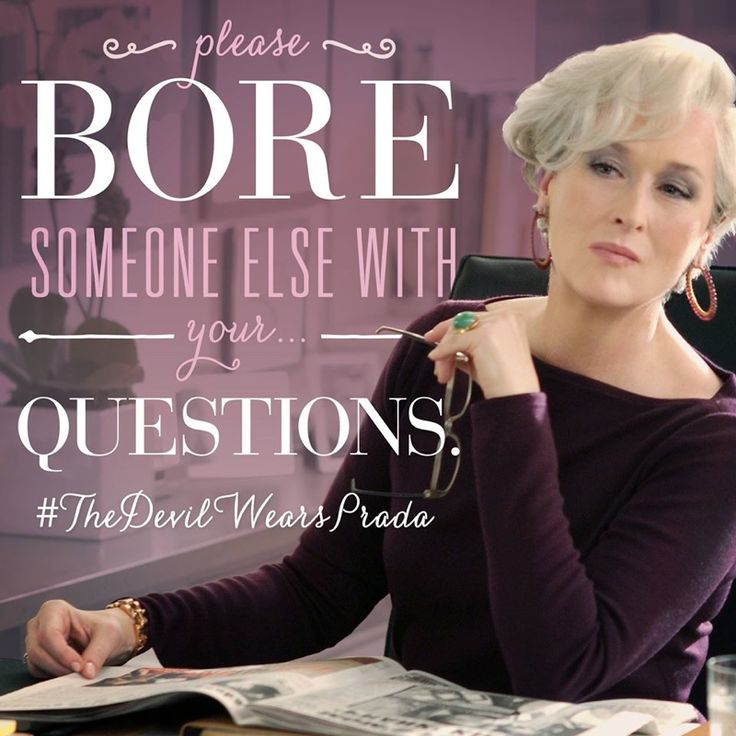
Take Meryl Streep in The Devil Wears Prada. Just from a visual point of view, just from the looks: is she an unattractive woman? “No, but she’s old. She represents something else.” Mmhm. And what exactly? Assertiveness? Success? Diplomatic skill? (Yes, ruthlessness too. We’re not discussing whether the how should necessarily be aspirational. But perhaps we could ask whether the what — resilience, success, diplomacy — might be something women could or should aspire. Depending on perspective. Likewise, we might ask who exactly wouldn’t like the taste of women aspiring those things.)
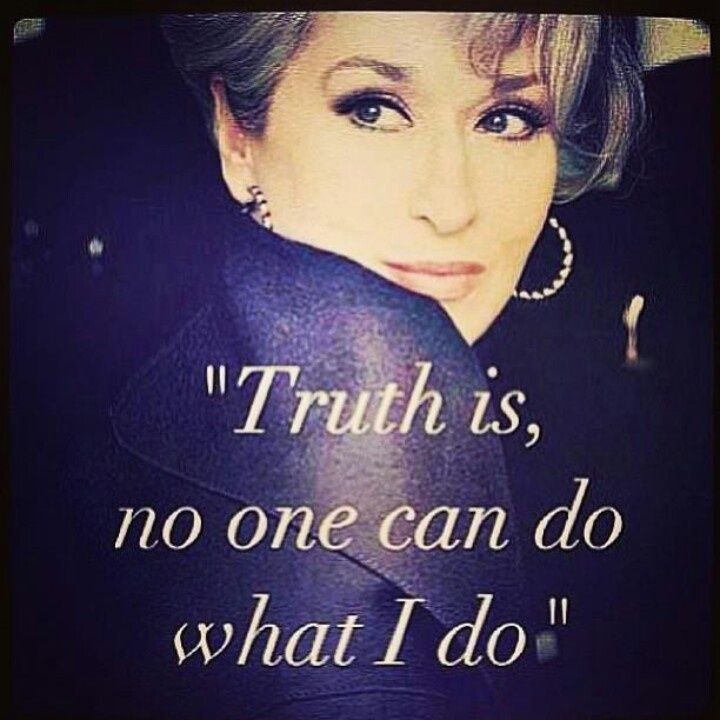
If female value is measured through appearance, through “f*ckability”, then a few more uncomfortable questions emerge. If a woman who knows who she is, what she stands for, what she wants, what she doesn’t want, what she likes, what she doesn’t like, and what she (no longer) tolerates is perceived as unattractive and unf*ckable, what exactly are we supposed to conclude from that? What kind of preferences men are supposed to have can we conclude from that?Because yes, Zoey Sarafina, I absolutely celebrate you in your early or mid-twenties when you know exactly where you’re headed, what you want, and where you see yourself in ten years. Truly. (Congratulations, you’re miles ahead of where I was at your age.) But let’s be honest: nobody has their shit together at twenty. Or twenty-five. Or even thirty. So wouldn’t that imply — correct me if I’m wrong — that female attractiveness, according to societal and media standards, is rooted in their uncertainty, insecurity, doubt, in them not fully knowing who they are and what they want? Which leads us to the next question: Why? (I’ll leave that one standing in the room too. It fits well there, in the middle of the room, like the well-known elephant.)
So, instead of allowing every decade, every phase of life, every chapter to possess its own special kind of beauty and attractiveness, we keep telling women they should maintain a version of themselves that naturally, evolutionarily, biologically expired ten or twenty years ago. (Meanwhile, we continue neglecting women’s healthcare and female-focused medical research — the very things that could genuinely help women live their “best self”. But that’s another topic. A very large one.)
Because our value still seems to be measured through admiration in other people’s eyes. Male eyes. Beauty earns admiration. Wisdom earns respect. And we should want both. Always.
And the more we push women into this impossible double bind, to please everyone, do everything, the more potential gets torn apart that might have created unimaginable things if every morning didn’t already have to begin with a 50-step skincare routine and every third glance from a stranger — male or female — didn’t awaken that tiny gnawing doubt about what they might be thinking (of outward appearance that is.)
And at this point, let me emphasize: good skincare, exercise, movement, and healthy nutrition are not villainous pursuits. Quite the opposite. Anything that makes you feel good, strong, healthy, more alive, powerful and helps you create from your innate potential is something the world benefits from, something that enriches the world and your own life. But I still have another question: Are you absolutely sure that what you think you need in order to feel good actually comes from your own thoughts and convictions? And if you realise that much of it is media-conditioned after all, then honestly: respect. Because being conscious and aware of that and refusing to sugarcoat it with a “yeah, but”, that’s powerful, that’s strong.
I think we have to agree that none of us can completely free themselves from structures and narratives that have been growing for decades, even centuries. We’re in this together.
But we are allowed to ask questions. Because good questions are where change begins. Questioning things and creating room for honest answers is where transformation starts.
And if we want to help pave even a small part of the way toward a world where wisdom and knowledge become attractive qualities in women and in general, in everyone, then today is a good day to look in the mirror and smile at yourself, sister. Because you are beautiful. Exactly as you are.
Gina Laventura © 2026
PS: The original inspiration for this post came to me in German, which is why the original post is in German and this is a translation. In order to make it as quickly as possible accessible for you, and because I was curious to see whether AI could really render us writers unemployed one day, I let it be translated by AI as an assistant, so I’d “just” have to edit, record and edit it again and not write every word by hand again, always jumping back and forth between German original and this post. On the one hand, I was astonished by the way in which the translation sometimes hit the tone of the original post, but I was as astonished by the amount of editing work I still had to do, to make it mine again. What do you think? Is the post still original and genuine when it was originally written by a human, translated by a machine and then proof-read and edited by a human again? (more on that topic to follow soon, but please share you opinions, I’m eager to know – it’s a critical topic and one I’m struggling with) [the PS was fully written by me in all my humanness, just to make that clear]

